• info@tabletennisnorth.ca

Concussion

Thank You for Supporting Concussion Awareness Week

TT NORTH No Comments

As Concussion Awareness Week 2026 comes to a close, we want to thank everyone who followed along, shared our posts, and helped spread the message of concussion awareness across the Northwest Territories.

Throughout the week, we explored some of the most important topics in concussion education, including:

  • Recognizing the signs and symptoms
  • Separating myths from facts
  • Preventing concussions through safe sport practices
  • Knowing what to do when a concussion is suspected
  • Supporting athletes through a safe Return to Sport process

Creating safer sport environments takes all of us. Athletes, coaches, officials, teachers, parents, volunteers, healthcare professionals, and fans each have an important role to play in protecting athlete health.

We also encourage everyone to continue learning by visiting trusted Canadian concussion resources, including:

Concussion awareness doesn’t end when the week is over. Every practice, every game, and every tournament is another opportunity to put what we’ve learned into action.

Thank you for helping us promote safer school sport across the Northwest Territories. Together, we can continue to protect every brain, every game.
If You Suspect It … Sit Them Out.

TT NORTH No Comments

When it comes to concussions, acting quickly can make all the difference.

If an athlete takes a hit to the head or body and you suspect a concussion, don’t wait. Remove them from play immediately, monitor for signs and symptoms, and make sure they are assessed by a healthcare professional before returning to sport. You don’t need to see an athlete lose consciousness for a concussion to have occurred. Coaches, officials, volunteers, parents, and teammates all play an important role by recognizing when something doesn’t seem right and taking action.

If a concussion is suspected:

  • Remove the athlete from play immediately
  • Monitor for symptoms and changes in behaviour
  • Do not leave the athlete alone during the initial period after the injury
  • Seek medical assessment before returning to sport or school activities

Remember, a coach’s role is not to diagnose a concussion, but to recognize when one may have occurred and ensure the athlete is removed from further risk. When in doubt … Sit them out. Protecting an athlete today helps protect their future.

Prevention Starts Before Play

TT NORTH No Comments

Creating a safer sport environment begins long before the opening whistle. Every practice, game, and tournament provides an opportunity to reduce the risk of concussion through preparation, education, and a culture built on respect.

Concussion prevention isn’t about one single action. It comes from many small choices made by athletes, coaches, officials, volunteers, parents, and event organizers every day.

Some of the most important ways to help prevent concussions include:

  • Respecting the rules of the game
  • Wearing and checking proper equipment
  • Teaching and reinforcing safe techniques
  • Creating an environment where athletes feel comfortable speaking up if something doesn’t feel right
  • Making safety part of every practice and competition

The Coaching Association of Canada also encourages coaches to have clear concussion policies, regularly inspect playing environments, educate participants about concussion symptoms, and support safe Return to Sport strategies after injury.

Safe sport is everyone’s responsibility.

When we make prevention part of our everyday routine, we help protect athletes and ensure they can continue enjoying sport safely. Small actions today can make a big difference tomorrow.

Fact or Fiction? Knowing the Truth About Concussions

TT NORTH No Comments

One of the biggest challenges with concussions is that many people still believe myths that can put athletes at risk.

During Concussion Awareness Week 2026, NT School Sports is helping our school sport community separate fact from fiction. Understanding the truth about concussions helps athletes receive the care they need and creates safer environments for everyone.

Two of the most common myths are:
❌ Myth: You have to hit your head to get a concussion.
✅ Fact: A concussion can occur after a significant impact to the head, face, or even the body.
❌ Myth: You have to lose consciousness.
✅ Fact: Most concussions do not involve a loss of consciousness. In fact, this occurs in fewer than 10% of concussions.

Knowing these facts can make all the difference. Recognizing a possible concussion early and responding appropriately helps protect an athlete’s health and supports a safe recovery.

Throughout the week, we’ll continue sharing trusted concussion education resources to help athletes, coaches, parents, officials, volunteers, and schools make informed decisions.

Together, we can create a safer sport environment for everyone.

Concussion Awareness Week 2026

TT NORTH No Comments

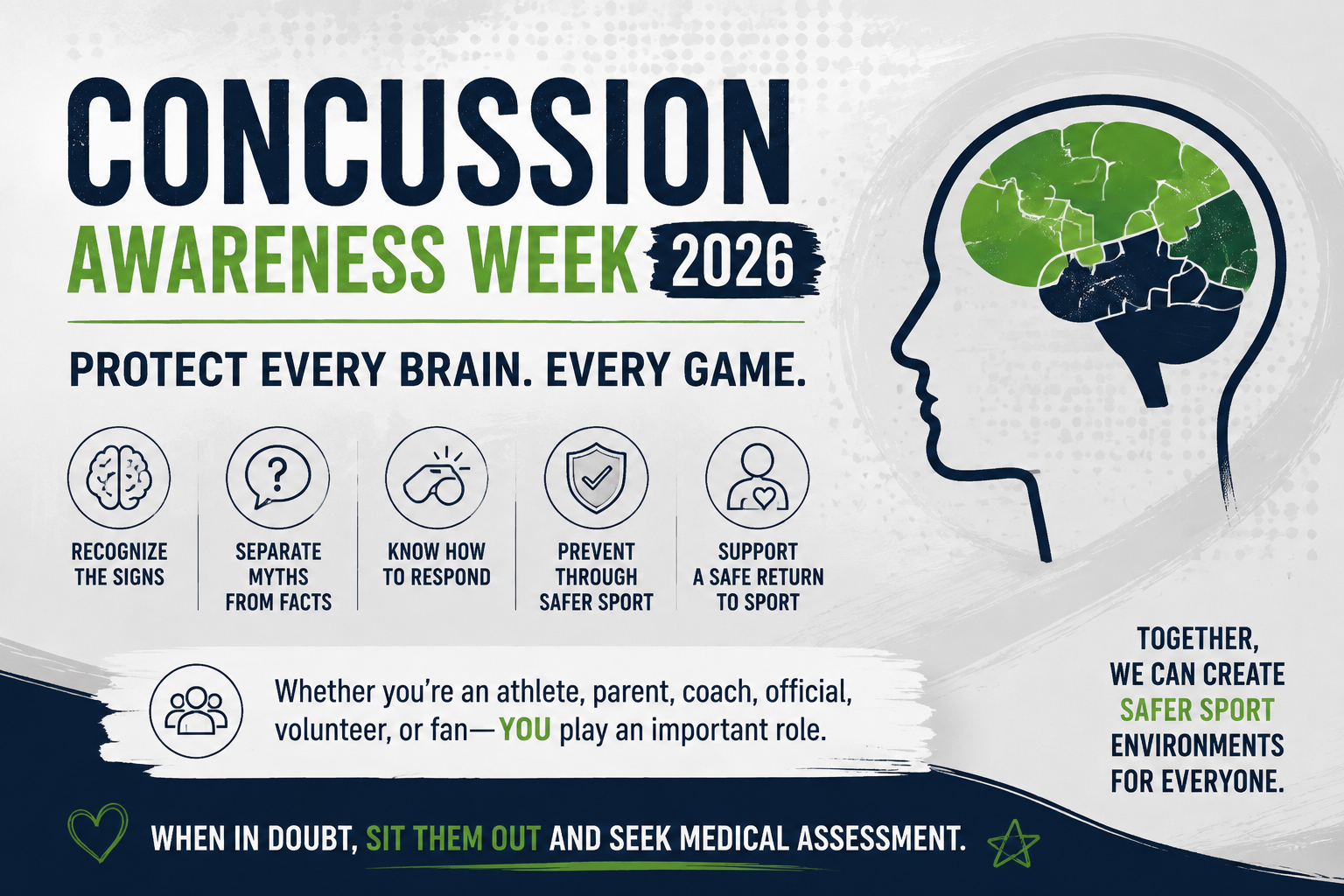
Protect Every Brain. Every Game.

Every athlete deserves to play in an environment where their health comes first. Concussion Awareness Week is an opportunity to learn how to recognize the signs of concussion, prevent injuries where possible, and support athletes through a safe recovery. Whether you’re an athlete, parent, coach, official, volunteer, or fan, you play an important role.

Throughout the week we’ll be sharing practical resources from the Coaching Association of Canada, Parachute, and the Concussion in Sport Group to help our community:
• Recognize the signs and symptoms
• Separate myths from facts
• Learn how to respond when a concussion is suspected
• Prevent concussions through safer sport practices
• Support athletes through a gradual Return to Sport

Concussions aren’t always obvious. They don’t always involve losing consciousness, and symptoms may appear immediately or develop over time. When in doubt, sit them out and seek medical assessment.

Together, we can create safer sport environments for everyone.

Concussion Awareness Week – Let’s Talk About It

TT NORTH No Comments

Across the North, in schools, on rinks, fields, gyms, and trails, our communities are moving, playing, and competing. And while we celebrate that active spirit, it’s just as important that we look out for each other along the way. Concussion Awareness Week is about more than just posters and policies. It’s about real conversations, shared understanding, and learning how to support one another when something doesn’t feel quite right.

That’s why we’re starting this week with a simple message: Concussions can happen to anyone, and knowing what to do matters.

We’re sharing four easy-to-follow posters you’ll see in schools, community spaces, and sport settings across the Northwest Territories:

Concussion Myths – Think you need to hit your head to have a concussion? Not true. Let’s clear up the confusion and get the facts straight.

Recognizing a Potential Concussion – From dizziness and headaches to “just not feeling right,” here are the signs we should all know, whether you’re a coach, a player, a parent, or a teammate.

Preventing Concussions – Smart planning, good equipment, and safe environments go a long way. Prevention starts before the whistle blows.

Return to Sport – Healing isn’t a race. Returning too soon can lead to serious consequences. Let’s support each other through recovery and return with care.

Whether you’re new to sport or have been coaching for decades, there’s always more to learn when it comes to brain health. And the more we talk, the safer we make our communities. Let’s make this week about awareness, not fear. About listening, not blaming. About protecting each other, on and off the field.

So, ask questions. Share your story. Look out for one another. Because every brain is worth protecting.

1

Are you interested in Table Tennis in the Northwest Territories?